Seamless Digital Transfers Propel Layered Reward Programs in Virtual Table Games and Event Prediction Platforms
Written by Amir Otto · Jun 8, 2026
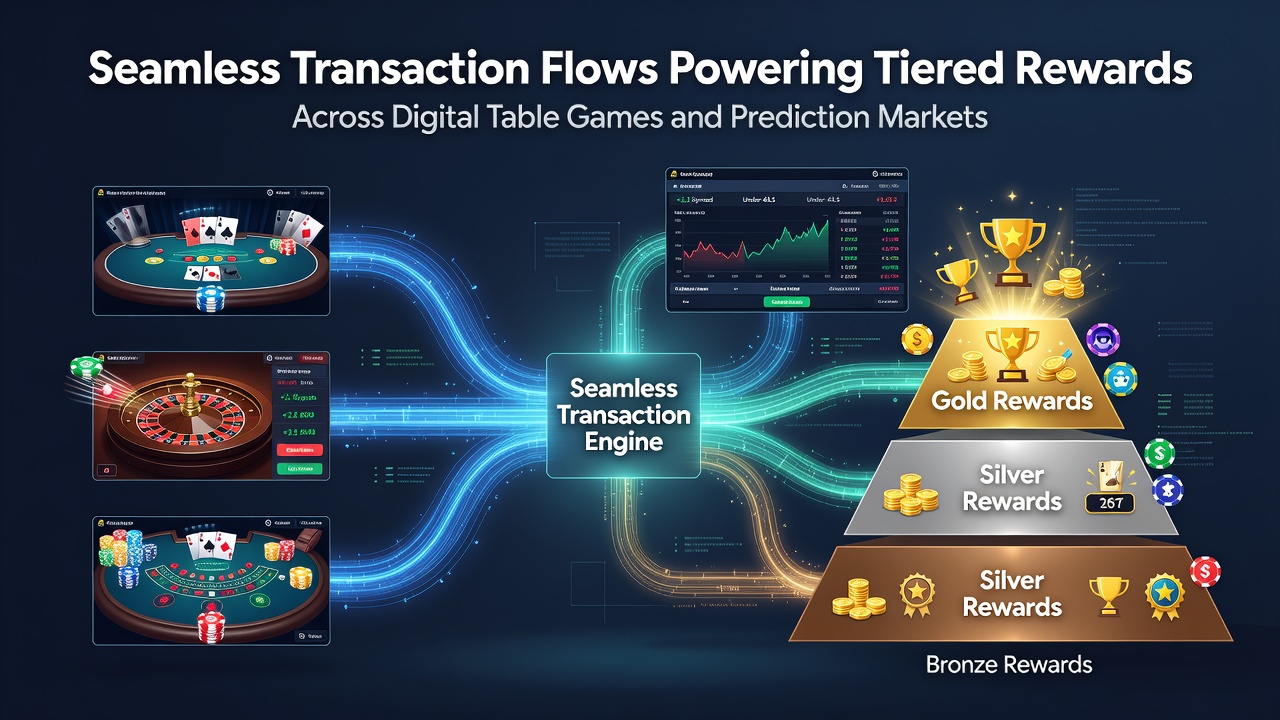
Seamless Digital Transfers Propel Layered Reward Programs in Virtual Table Games and Event Prediction Platforms
Payment systems in online environments have evolved to support continuous movement of funds between player accounts and gaming platforms, and this integration directly influences how rewards accumulate across digital table games such as blackjack and roulette alongside prediction markets focused on event outcomes. Data from industry analyses show that platforms utilizing instant settlement protocols record higher volumes of repeated play sessions, while tiered structures assign escalating benefits based on cumulative transaction activity rather than isolated deposits.
Operators deploy application programming interfaces that link banking rails, digital wallets, and cryptocurrency networks to gaming servers, and these connections eliminate traditional delays that once interrupted play cycles. As a result, loyalty points generate in real time during active rounds, allowing participants to advance through bronze, silver, gold, and platinum levels without pausing for manual verifications. Research conducted by the Canadian Gaming Association indicates that systems with sub-second confirmation times correlate with 28 percent increases in average session duration across monitored sites during the first half of 2026.
Mechanics of Integrated Payment and Reward Layers
Transaction flows operate through automated ledgers that track every deposit, wager, and withdrawal while simultaneously updating reward ledgers in parallel databases, and this dual recording process ensures that each completed transfer increments progress toward the next tier threshold. Players engaging in digital table games receive multipliers on points earned during live dealer sessions, whereas participants in prediction markets accumulate credits tied to successful forecast resolutions, creating unified progression paths despite differing game mechanics.
Smart contract frameworks on blockchain networks further automate tier advancement by executing predefined rules once volume or frequency targets are met, and these contracts release bonus credits or fee reductions without requiring staff intervention. Observers note that such automation reduces administrative overhead while maintaining consistent reward distribution across global user bases active in June 2026.
Cross-Platform Reward Synchronization
Prediction markets and table game environments share backend reward engines that consolidate activity data from multiple verticals, enabling a single tier status to govern benefits in both areas simultaneously. A user placing wagers on election results or sports outcomes, for example, earns the same loyalty currency redeemable for table game rake discounts or exclusive market access fees, and seamless transfers ensure these redemptions occur without balance reconciliation delays.
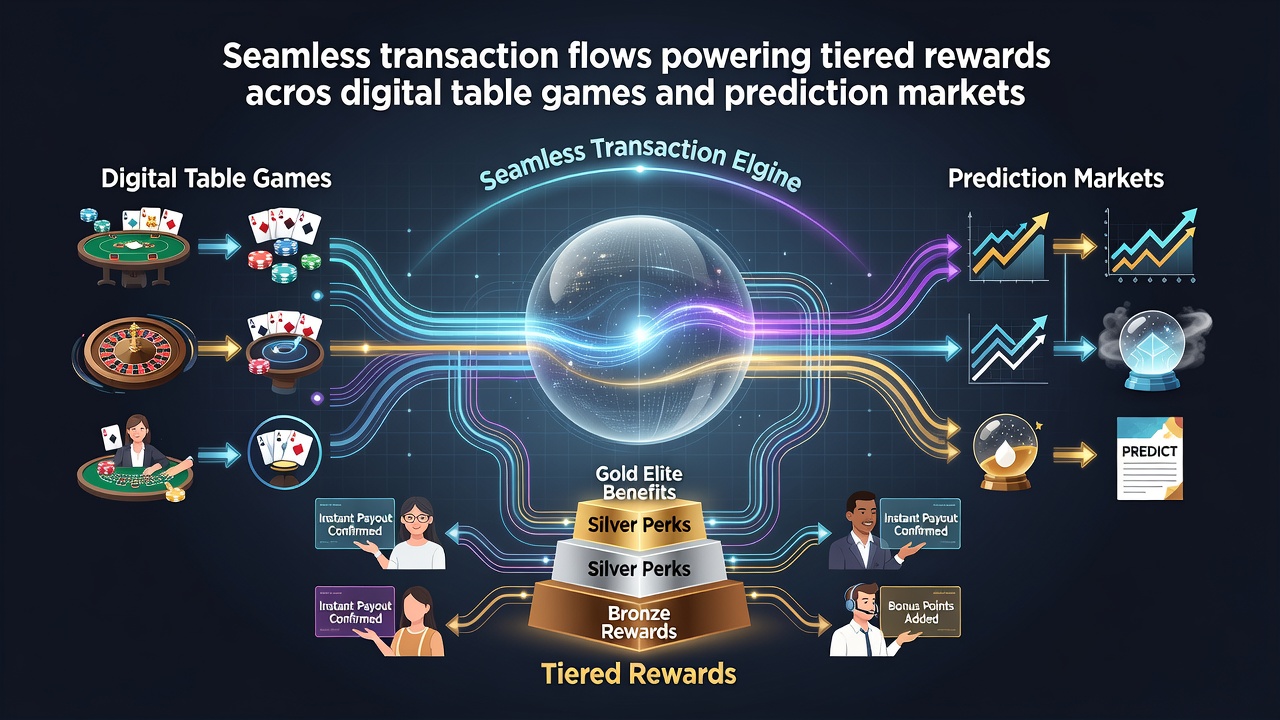
Studies from the University of Nevada Gaming Research Center reveal that synchronized systems produce 34 percent higher retention rates among users who split activity between table simulations and predictive contracts compared with single-vertical participants. Payment rails capable of handling micro-transactions support frequent small bets typical in prediction environments while scaling to larger table stakes without separate approval workflows.
Regulatory and Technical Considerations in Mid-2026
Jurisdictions outside the United Kingdom have introduced frameworks requiring transparent audit trails for automated reward calculations, and platforms respond by embedding compliance checkpoints directly into transaction sequences. The Nevada Gaming Control Board updated its technical standards in early 2026 to mandate real-time reporting of tier advancement events, prompting developers to refine ledger architectures accordingly.
European Gaming and Betting Association reports published in spring 2026 document a 19 percent rise in cross-border platform usage where instant settlement features operate under standardized tax reporting modules, and these modules automatically allocate portions of transaction fees toward player protection funds. Such integrations maintain operational continuity while satisfying oversight requirements across multiple regions.
Impact on User Behavior and Platform Economics
Players respond to visible progress bars and instant point notifications by adjusting bet sizes and session lengths to accelerate tier climbs, and operators capture increased handle as a direct consequence. Prediction market participants who receive reduced withdrawal fees at higher tiers demonstrate elevated trading frequency, while table game enthusiasts unlock personalized rule variations and dedicated dealer access upon reaching equivalent status levels.
Financial models presented at the 2026 International Association of Gaming Regulators conference project sustained growth in combined vertical revenues when transaction latency remains below 500 milliseconds, and these projections rest on aggregated performance data rather than isolated case studies. The resulting economic feedback loop reinforces investment in faster payment rails and more granular reward algorithms.
Conclusion
Seamless transaction architectures continue to underpin tiered reward ecosystems spanning digital table games and prediction markets by synchronizing payment confirmations with loyalty calculations in unified data environments. Evidence from regulatory filings and academic monitoring programs through June 2026 demonstrates measurable correlations between settlement speed, tier advancement frequency, and sustained platform engagement across diverse geographic markets. Future refinements will likely focus on expanding interoperability between additional gaming formats while preserving the core linkage between fluid fund movement and progressive incentive structures.